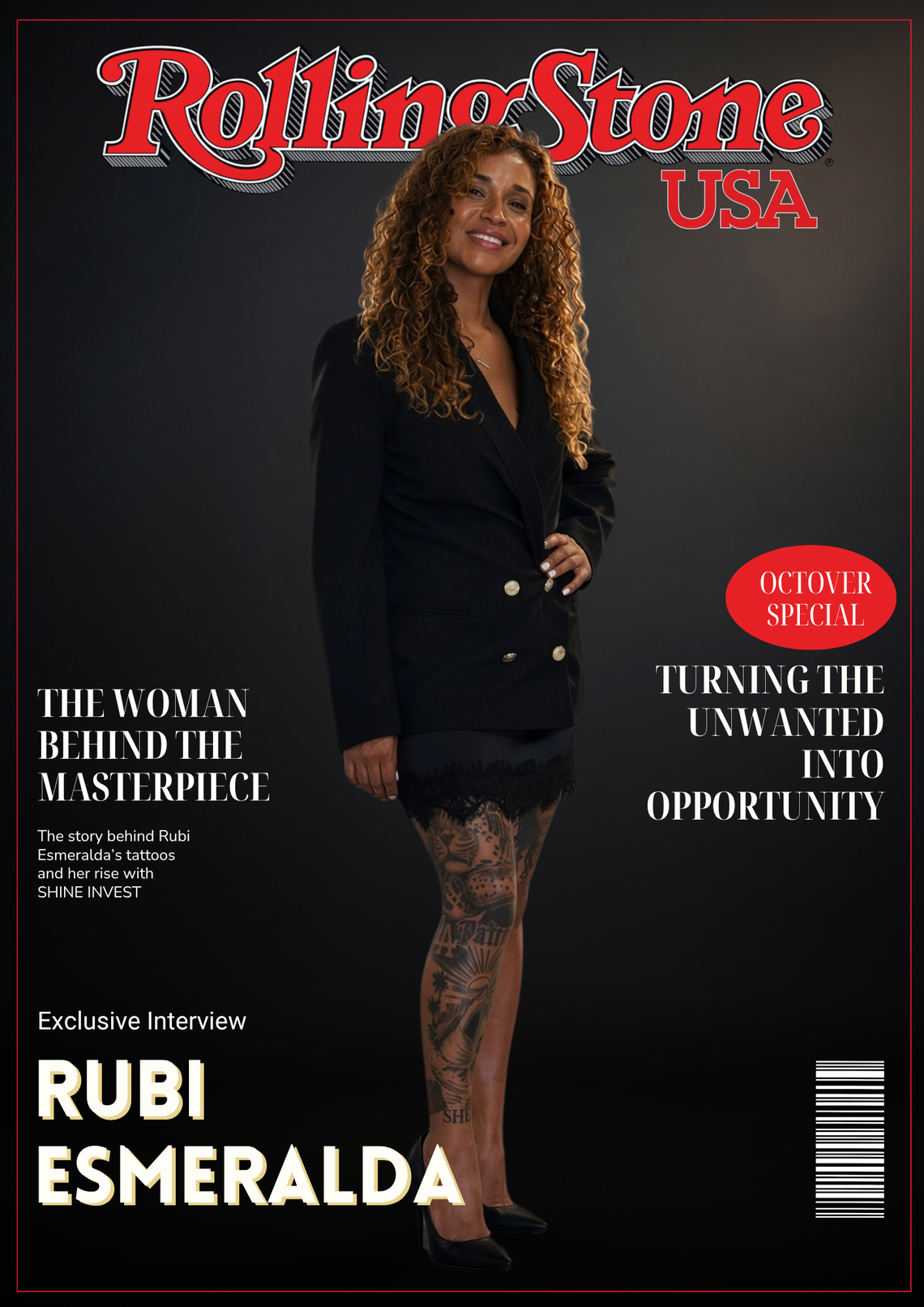
There are people who build their careers by pursuing the opportunities everyone wants. Then there are people who build them by stepping into situations everyone else has already decided are too difficult. Rubi Esmeralda belongs to the second group. Long before SHINE INVEST became part of her professional identity, Rubi was learning through the projects other people did not want to touch. Fire-damaged properties, violation cases, complicated situations and projects considered leftovers were repeatedly placed in front of her. Instead of turning away, she said yes.
“They gave me the scraps,” Rubi recalls. “They gave me everything that nobody else wanted. They gave me all the hard cases.”
It was not necessarily the easiest way to build a business. Many of those early projects did not offer the kind of financial return that would normally make them attractive. Some were already burdened by significant problems, leaving little room for substantial profit. But Rubi was not looking at those assignments solely through the lens of immediate financial gain. She saw opportunities to solve problems, help clients and gain experience that could not be learned from easier projects.
“I always said yes. I’m always up for a challenge,” she says.
That willingness became one of the defining characteristics of her professional journey. Every difficult case presented another problem to understand, another obstacle to navigate and another opportunity to prove that a situation others considered impossible might still have a solution.
Over time, those experiences accelerated her knowledge, strengthened her reputation and helped create the foundation for SHINE INVEST.
For Rubi, the connection between her professional journey and her personal story is impossible to ignore. Her body is covered with tattoos, but she does not describe them simply as artwork or fashion. Each one represents a chapter, a lesson or an experience she chose to transform into something of her own.
“Every single one tells a story of trauma, of pain. I just turned it into art,” she explains.
That philosophy of transformation runs through her entire story. Whether she was facing a damaged property, a complicated violation case or a deeply personal experience, Rubi developed an instinct for looking at what already existed and asking what could be created from it.
The Cases Nobody Wanted
The projects that shaped Rubi’s career were not necessarily the ones people would have chosen if they had the luxury of selecting only perfect opportunities. They came with problems already attached. Fire damage could turn a straightforward property situation into a complicated
undertaking. Violation cases could create additional layers of difficulty. Other assignments arrived with circumstances that had caused previous people to hesitate or walk away.
Rubi accepted them.
The decision may sound simple in retrospect, but repeatedly accepting difficult work requires a particular kind of confidence. It requires the willingness to enter situations without knowing exactly how the story will end. It requires patience when the solution takes longer than expected and persistence when the obvious route is no longer available.
Rubi’s approach was straightforward: take the case, help the client and find the solution.
“I helped the client. Didn’t really make much because it was already a big problem, but that was not the point,” she says. “I was able to help the client. The client was happy and the problem was solved. Simple as that, solution.”
That attitude gradually became a form of education. The difficult cases taught her how to recognize problems faster, communicate more effectively and approach complicated situations with greater confidence. The assignments that may initially have appeared to be professional leftovers became opportunities to develop skills that would later become essential to building her own company.
“They just gave me everything impossible to make possible,” Rubi says.
The phrase is more than a description of the work. It captures the mindset that eventually became central to her identity as an entrepreneur.
Turning Experience Into SHINE INVEST
Businesses are often presented through their finished versions. The company exists, the brand has an identity and the entrepreneur has a story of success that can appear almost inevitable when viewed from the outside. Rubi’s journey offers a different picture. SHINE INVEST was shaped by the accumulated experience of saying yes to situations that did not come with easy answers.
Every difficult project added another piece to that experience.
There was a practical benefit to accepting cases that others avoided. Rubi gained exposure to situations that demanded problem solving under pressure. She learned from circumstances where there was little margin for error and where the client’s satisfaction depended on finding a workable path forward. The work also allowed her to build trust through results rather than promises.
That trust became increasingly important.
A client facing a serious property problem does not simply need someone who can describe the difficulty. They need someone willing to work through it. For Rubi, the satisfaction came from reaching the other side of that process and seeing the client relieved because the problem had finally been solved.
The financial reward was not always significant, but the experience was.
In time, those experiences became part of the foundation upon which SHINE INVEST could grow. What began as an accumulation of difficult cases became a professional philosophy: there is value in being the person willing to take on the problem everyone else has rejected.
That philosophy also says something about entrepreneurship itself. Building something from the ground up rarely means receiving perfect circumstances. More often, entrepreneurs work with what is available, learn from what goes wrong and create opportunities from situations that initially appear unpromising.
Rubi’s career developed in much the same way.
The Stories Written Across Her Skin
The most intimate expression of Rubi’s philosophy of transformation can be seen across her skin.
Her tattoos have become a visual record of her life. They carry stories of difficult chapters, but she does not present them as a catalogue of suffering. She sees them as something she transformed and claimed as her own.
“I just turned it into art.”
That choice is significant. Art does not have to erase the experience that inspired it. It can preserve a memory while changing its meaning. What once belonged to a difficult chapter can become part of a larger composition, shaped by the person who lived it.
Rubi’s tattoos reflect that authorship.
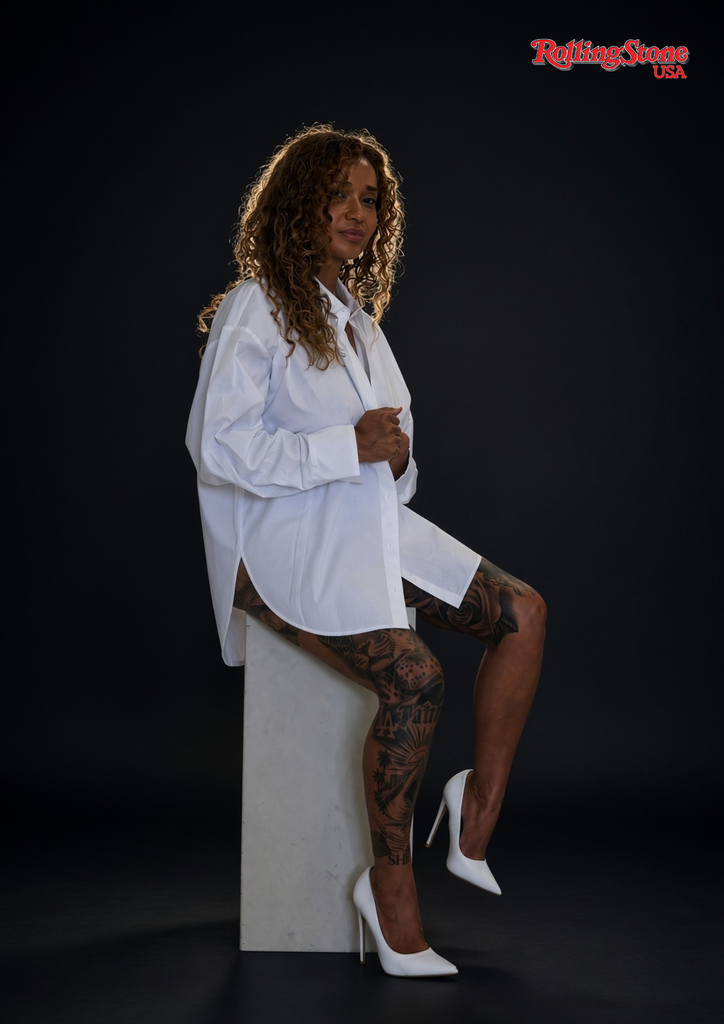
They tell stories of where she has been, but more importantly, they show what she chose to make from those experiences. Rather than hide the evidence of difficult chapters, she incorporated them into the person she became.
“I have my full body covered,” she says, explaining that the tattoos refiect just how much she has lived through.
Yet the conclusion she draws from them is not one of defeat.
“The magic in it? I made art of it. So now my body looks like a masterpiece.”
That perspective gives the tattoos a significance beyond their appearance. They become part of the same philosophy that shaped her professional life: transformation is possible, even when the starting point is far from perfect.
The Art of Transformation
Resilience is often told as a story with a clean ending: something difficult happens, the person overcomes it and everything is suddenly better. Rubi’s story is more grounded than that.
She does not need to erase the past to move forward from it. What matters is what she chose to build from it.
The same principle applies to the professional challenges that shaped her career. A fire-damaged property does not become simple because someone believes in finding a solution. A violation case does not become easy because the person handling it is determined. Difficult problems remain difficult.
What changes is the response.
Rubi repeatedly chose action.
She said yes when the case was complicated. She continued when the financial reward was limited. She focused on helping the client and solving the problem. With each experience, she became better equipped for the next challenge.
That process helped build SHINE INVEST, but it also sharpened the qualities that define Rubi: resourcefulness, persistence, judgment and the ability to see possibility where others see limitation.
Making the Impossible Possible
Rubi Esmeralda’s story ultimately comes down to transformation.
The projects others considered scraps became the experiences that accelerated her growth. The cases nobody wanted became opportunities to earn trust. The problems that looked impossible became lessons in persistence and problem solving. And the experiences written across her skin became art.
There is a natural parallel between the woman who walks into a difficult project and the woman who looks at her own reflection and sees a body covered in the art of her own transformation.
Both begin with what already exists. Both require vision.
And both demand the same question: What can I make from this?
Rubi’s answer has been consistent. She makes solutions. She builds relationships. She creates businesses. She turns experience into art.
Her story is not that she avoided difficulty. It is that she refused to let difficulty determine what came next.
“They just gave me everything impossible to make possible.”
In another person’s story, that might sound like a challenge. For Rubi, it sounds more like a calling.
The cases nobody wanted gave her experience. The clients who needed solutions gave her purpose. The obstacles sharpened her instincts. And the experiences written across her skin became something entirely her own: art.
Today, Rubi Esmeralda’s tattoos are not simply reminders of where she has been. They are evidence of transformation and authorship – a visible expression of her ability to take what already exists and create something new from it.
That is the deeper meaning behind her resilience.
She does not erase what came before.
She creates from it.
And perhaps that has always been her gift: seeing what others might dismiss as damaged, difficult or impossible – and recognizing what it still has the potential to become.