
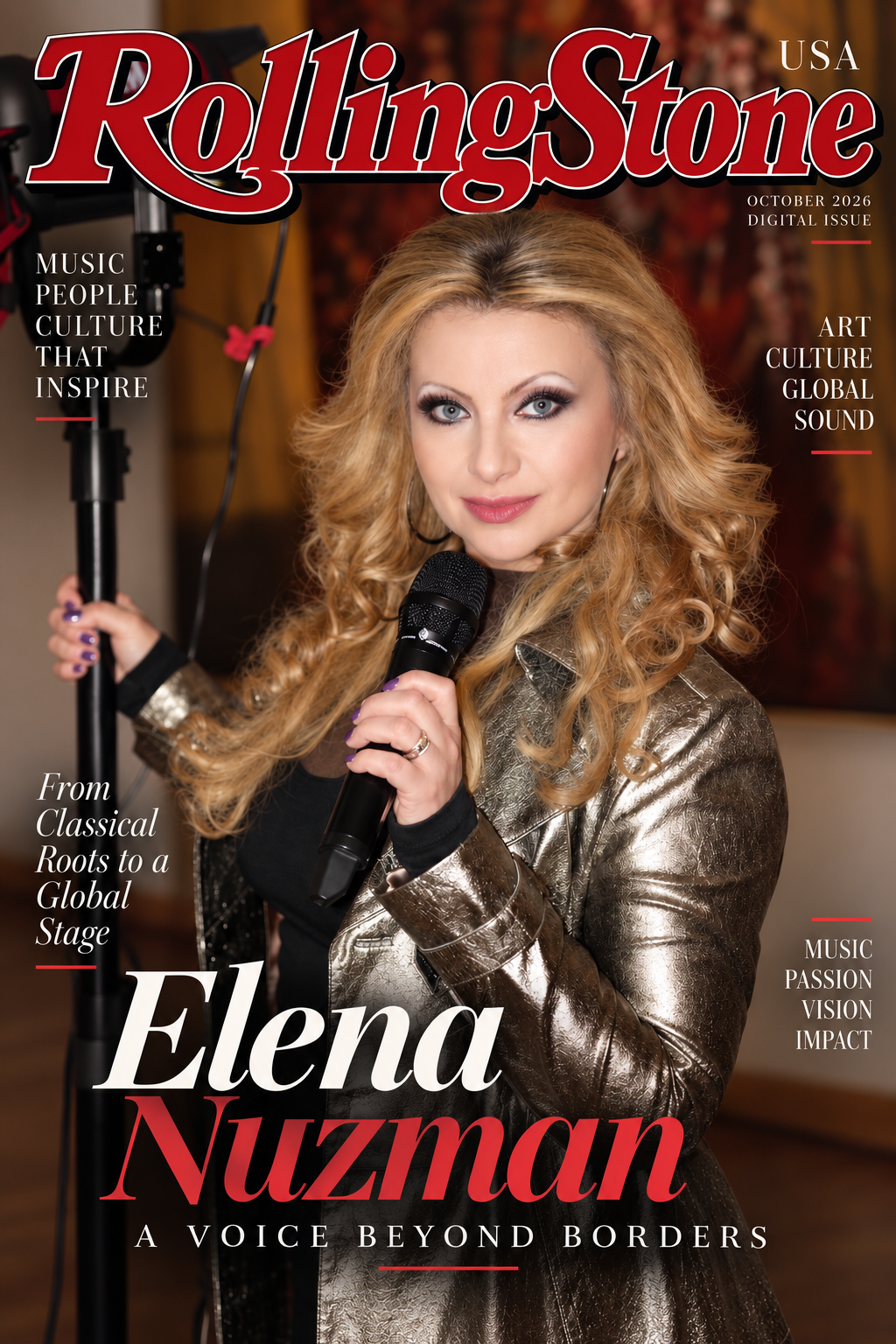
The Unexpected Meeting of Two Musical Worlds
Classical music and rock are often presented as opposites.
One suggests concert halls, scores, centuries of tradition and carefully controlled interpretation. The other evokes amplified instruments, powerful rhythms, freedom and raw energy.
Elena Nuzman has spent much of her career proving that the distance between these worlds may not be as large as people imagine.
Her own musical life began firmly within the classical tradition. Born in Moldova to a family of professional musicians, she developed an extraordinary relationship with the piano from childhood. At two, she was already reproducing melodies by ear. At seven, she entered an music Lyceum for gifted students and began the intensive classical education that would eventually lead her to become a concert pianist.
But somewhere along the way, another sound entered the picture.
Rock.
And instead of forcing her to choose between two identities, it gave her another way to express the one she already had.
The Classical Foundation
Before the stage lights, recording sessions and contemporary performances, there was discipline.
Nuzman’s classical education was demanding. Years of training developed the precision, musicality and concentration expected of a concert pianist. Her education later became international, taking her through Russia, France, the United States, Israel and Canada before she continued her studies at the Robert Schumann University of Music in Düsseldorf.
She completed a master’s degree in concert piano.
That background matters when considering her later relationship with rock.
Rock may sound spontaneous, but powerful performance still requires timing, control and an understanding of musical structure. Nuzman already possessed those qualities.
What changed was the emotional vocabulary.
The Moment the Voice Took Over
Singing entered Nuzman’s career almost unexpectedly.
She participated in a vocal competition and won first prize in the Rock-Pop category.
It was a significant discovery.
The concert pianist suddenly had another instrument available to her, and this one could communicate directly with an audience.
Her four-octave vocal range gave her considerable technical possibilities, but her classical training may have been just as important. She understood musical phrasing. She understood dynamics. She knew how to build tension and release.
The rock environment gave those skills a new setting.
I Believe In You
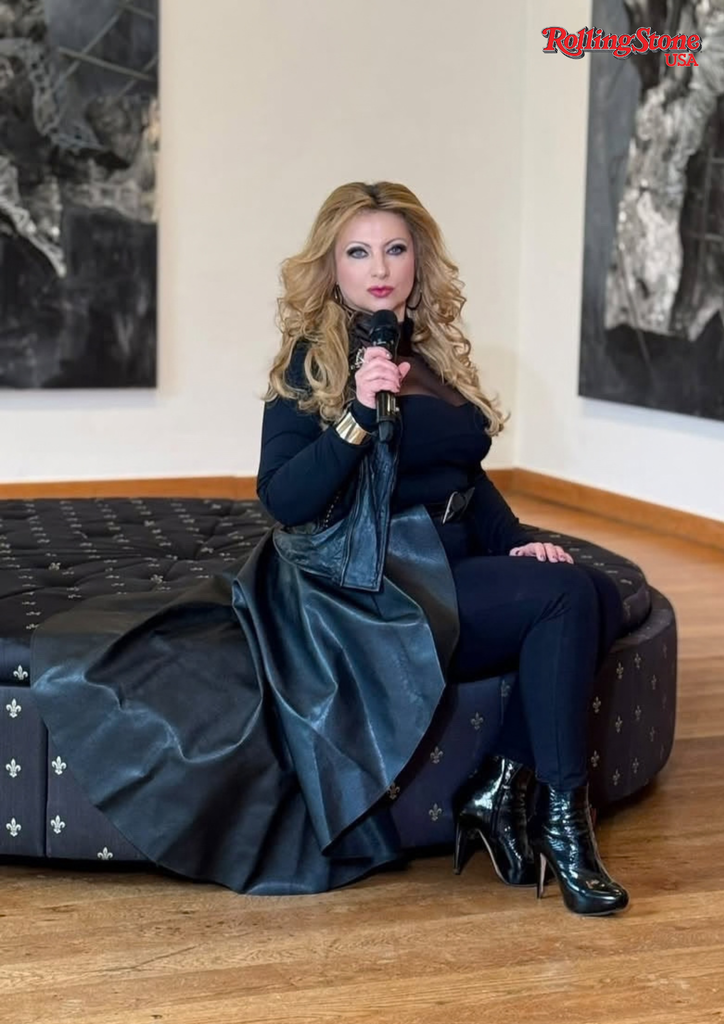
Her debut album, I Believe In You, became the beginning of a new public chapter.
The album combined emotional ballads with stronger rock and pop interpretations, revealing an artist who could move beyond the expectations attached to her classical background.
Its success on the German Newcomer Charts, where it remained in the Top 10 for weeks, demonstrated that audiences were willing to follow her into this new territory.
Then came performances that placed the crossover idea on an even larger stage.
Her interpretation of Whitesnake’s “Here I Go Again” became one of the notable examples of her rock-oriented work, including performances during New Year’s Eve celebrations at Berlin’s Brandenburg Gate.
There is something particularly fitting about that song appearing in Nuzman’s story.
It carries themes of movement and independence, qualities that have defined her artistic journey.
Why the Combination Works
The most convincing musical crossovers are not built simply by placing two genres next to each other.
They work when the artist understands both.
Nuzman brings the architecture of classical music into her contemporary performances. She knows how to shape a melody and create emotional movement. At the same time, she embraces the immediacy of rock and pop.
The result is neither a classical performance pretending to be rock nor a rock performance performed by someone who happens to have classical training.
It is something more personal.
Her music reflects both worlds because both worlds have become part of her.
Romanticism Meets Modernity
That idea became even more apparent with Liebestraum.
The project drew inspiration from Romantic-era classical music but approached it through contemporary songwriting and performance.
Romantic music is particularly suited to Nuzman’s artistic philosophy because it is emotionally expansive. Its themes of longing, passion, melancholy and beauty remain recognizable even when the historical setting changes.
Nuzman used that emotional foundation to create something contemporary.
The title track surpassed four million views on YouTube and earned the IMPALA Silver Award.
The achievement suggested that classical inspiration did not need to remain distant from modern audiences.
It could be reimagined.
The Composer Enters the Conversation
Another important part of Nuzman’s evolution has been her development as a composer.
Performing other people’s music had given her decades of experience understanding interpretation. Composition gave her the opportunity to turn that experience into original expression.
This is where the classical and rock sides of her identity become even more useful.
Classical training gives structure.
Rock gives attitude.
Contemporary music gives accessibility.
Her own creative instincts give the combination a personal voice.
My Piano And I
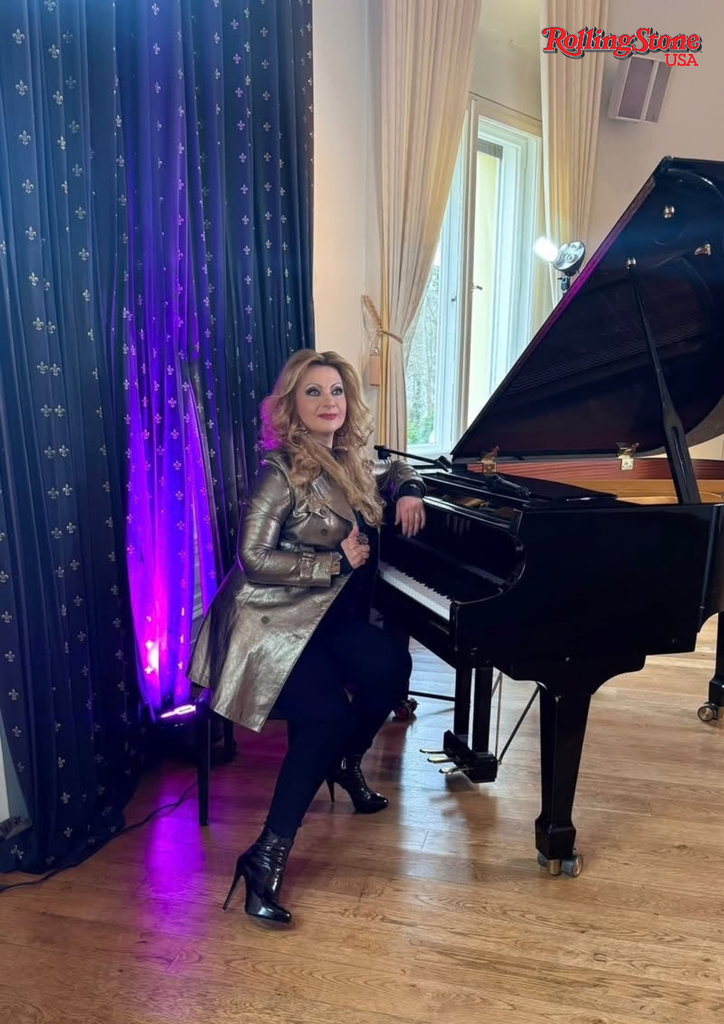
Her 2025 album My Piano And I provides another perspective on the journey.
After exploring vocal performance, rock, pop and contemporary composition, Nuzman returned to the relationship that started everything: herself and the piano.
The project brings together celebrated songs, new compositions and English versions of some of her works.
The album does not suggest a return to the past.
Instead, it demonstrates how the past continues to influence the present.
The piano that once represented classical discipline can now sit comfortably beside a voice shaped by rock and contemporary music.
The Sound of an Artist Without Borders
Elena Nuzman’s story is not ultimately about choosing classical music over rock.
It is about refusing the assumption that she has to choose.
Her career demonstrates that musical identity can be cumulative. One genre does not have to erase another. A classical education can coexist with rock energy. A concert pianist can become a vocalist. A performer can become a composer.
The four-octave voice, the classical technique, the contemporary performances and the original compositions are not disconnected achievements.
They are parts of one artistic personality.
And that personality thrives in the space between categories.
Elena Nuzman has found her own meeting point between elegance and intensity, discipline and freedom, tradition and reinvention.
That is where her rock soul lives.
And it was built on classical foundations.