
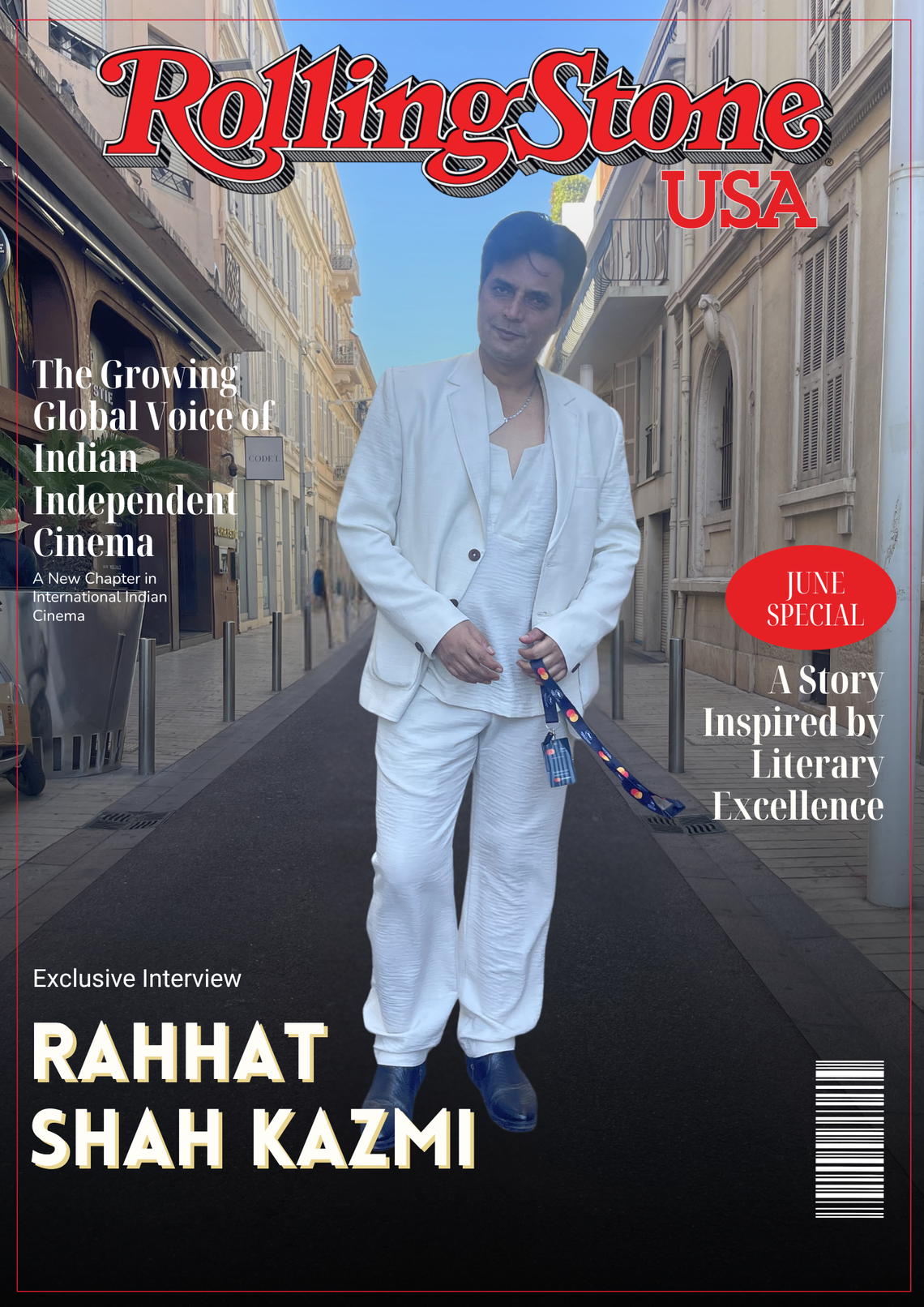
Rahhat Shah Kazmi’s Bombay Stories Continues Its Remarkable International Journey
For nearly twenty years, filmmaker Rahhat Shah Kazmi has followed a path very different from the one most often associated with success in the film industry.
While much of the spotlight has traditionally focused on commercial blockbusters, celebrity driven projects, and opening weekend numbers, Kazmi has remained dedicated to a more enduring pursuit. He has built his career around stories. Stories that explore human emotions, social realities, relationships, and the complexities of life itself.
Today, that commitment is earning global recognition.
His latest feature film, Bombay Stories, starring Mouni Roy, Anupriya Goenka, and Sushmita Singh, has emerged as one of the most talked about Indian independent films on the international festival circuit. Following a sold out World Premiere at the Cannes Film Festival, the film went on to win the prestigious Best Feature Film Award at the Paris Film Awards, marking a major achievement for both the filmmaker and Indian independent cinema.
The success of Bombay Stories is not simply a festival triumph. It is the culmination of years spent championing meaningful storytelling and proving that authentic narratives can connect with audiences across cultures and continents.
A Story Inspired by Literary Excellence

At the heart of Bombay Stories lies the enduring influence of one of South Asia’s greatest literary voices, Saadat Hasan Manto.
Known for his fearless exploration of human nature and society, Manto’s writings continue to inspire generations of artists and storytellers. Drawing inspiration from some of his most celebrated works, including Hatak, Khushiya, and Bu, the film reimagines his themes within the context of modern day Mumbai.
Rather than functioning as a direct adaptation, Bombay Stories creates an original narrative that captures the emotional depth and social observations that made Manto’s work timeless.
The film explores themes of loneliness, desire, dignity, and emotional survival through interconnected stories that reflect the realities of contemporary urban life. These universal emotions allow the film to resonate not only with Indian audiences but also with viewers around the world.
It is a story deeply rooted in Indian culture while speaking a language that transcends borders.
The Vision Behind RKFS
The film was developed under the banner of Rahhat Kazmi Film Studios, popularly known as RKFS.
Founded by Rahhat Shah Kazmi and his wife and creative partner Asiya Kazmi, the studio has steadily grown into one of the most internationally connected independent production houses associated with Indian cinema.
What began as a passion driven venture has evolved into a platform for ambitious storytelling and international collaboration. Over the years, RKFS has developed projects that combine artistic integrity with global appeal, creating opportunities for stories that might otherwise remain untold.
Much of the studio’s success can be attributed to the partnership between Rahhat and Asiya Kazmi. Together, they have spent years building relationships, nurturing creative talent, and developing productions that bridge cultures through cinema.
Their shared vision has helped transform RKFS into a respected name within international film circles.
A Global Collaboration
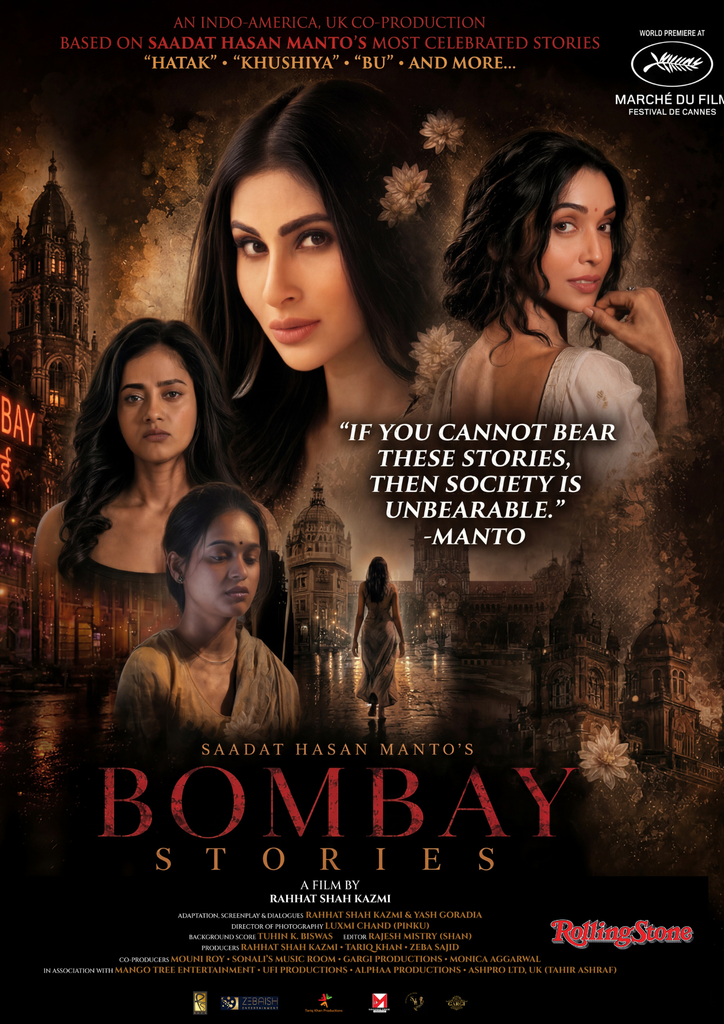
Bombay Stories reflects the increasingly international outlook of contemporary independent filmmaking.
The project was produced by Rahhat Shah Kazmi, Tariq Khan, and Zeba Sajid, alongside collaborators Sonali Doshi, Gargi Duggal, Monica Aggarwal, and Tahir Ashraf.
Created in association with Alphaa Productions and Mango Tree Entertainment India, the film brought together creative voices from different backgrounds while remaining firmly connected to its Indian roots.
This collaborative spirit has become one of the defining characteristics of Kazmi’s work. His ability to combine local stories with international partnerships has enabled his films to reach wider audiences while preserving their cultural authenticity.
A Memorable Premiere at Cannes
The Cannes Film Festival has long been regarded as one of the most prestigious stages in world cinema.
For any filmmaker, premiering a film there is an achievement. For an independent production, receiving a sold out screening is particularly significant.
When Bombay Stories made its World Premiere at Cannes, anticipation was high. Festival delegates and film enthusiasts arrived early, eager to secure seats for the screening. By the time the film began, the auditorium was filled to capacity.
What followed was an overwhelmingly positive response.
Audiences remained engaged throughout the screening, responding to the film’s emotional depth and literary richness. Conversations continued long after the credits rolled, with many viewers praising the film’s ability to balance intimate storytelling with broader social themes.
The strong word of mouth generated during the festival quickly positioned Bombay Stories as one of the standout Indian films showcased at Cannes.
Mouni Roy’s Powerful Performance
Among the many aspects praised by audiences and critics, Mouni Roy’s performance received particular attention.
Portraying the character of Sharifan, Roy delivers one of the most emotionally layered performances of her career. Her portrayal captures the vulnerability, resilience, and inner strength of a woman navigating a world shaped by loneliness, longing, and hope.
Rather than relying on dramatic gestures, she brings subtlety and authenticity to the role, allowing the emotional journey of the character to unfold naturally.
Alongside Roy, Anupriya Goenka and Sushmita Singh contribute compelling performances that strengthen the film’s emotional core and enrich its interconnected narrative structure.
Together, the cast creates a cinematic experience that feels deeply personal and universally relatable.
Recognition in Paris
Following its successful Cannes premiere, Bombay Stories continued its international journey with another major achievement.
At the Paris Film Awards, the film was honored with the Best Feature Film Award, one of the event’s highest recognitions.
The victory further cemented the film’s reputation as a significant work of contemporary independent cinema and confirmed the positive response it had already received from festival audiences.
For Rahhat Shah Kazmi and his team, the award represented more than recognition. It served as validation of years spent pursuing meaningful stories and believing in the universal power of human experiences.
A Career Built on Persistence

The success of Bombay Stories is the latest chapter in a remarkable international career.
Over the years, Kazmi has created a body of work that includes acclaimed films such as Mantostaan, Lihaaf, Lines, Am I Next, Last Coffee, and Country of Blind.
His achievements extend beyond festival screenings and awards. The screenplay of Country of Blind was acquired by the Academy Library in Los Angeles, an honor that reflects the lasting value of his work within global cinema.
His international co production Love in Vietnam further expanded his reputation, winning Best Asian Film and earning him the Best Director of Asia honor at the Seoul Global Movie Awards.
These accomplishments have established him as one of the few independent Indian filmmakers consistently creating work that resonates on a global stage.
The Growing Global Voice of Indian Independent Cinema
As Bombay Stories continues to receive acclaim from audiences and critics, its success carries a larger message for the film industry.
It demonstrates that independent Indian cinema can achieve international recognition without sacrificing its identity or cultural authenticity. Stories rooted in local realities can resonate universally when they are told with honesty, empathy, and artistic conviction.
For Rahhat Shah Kazmi, the journey from a houseful Cannes premiere to winning Best Feature Film in Paris is another milestone in a career defined by persistence and passion.
For audiences around the world, it is a reminder that great stories know no boundaries.
And for Indian cinema, it is proof that meaningful storytelling continues to find its place on the global stage.