From Harlem Roots to a New Sound
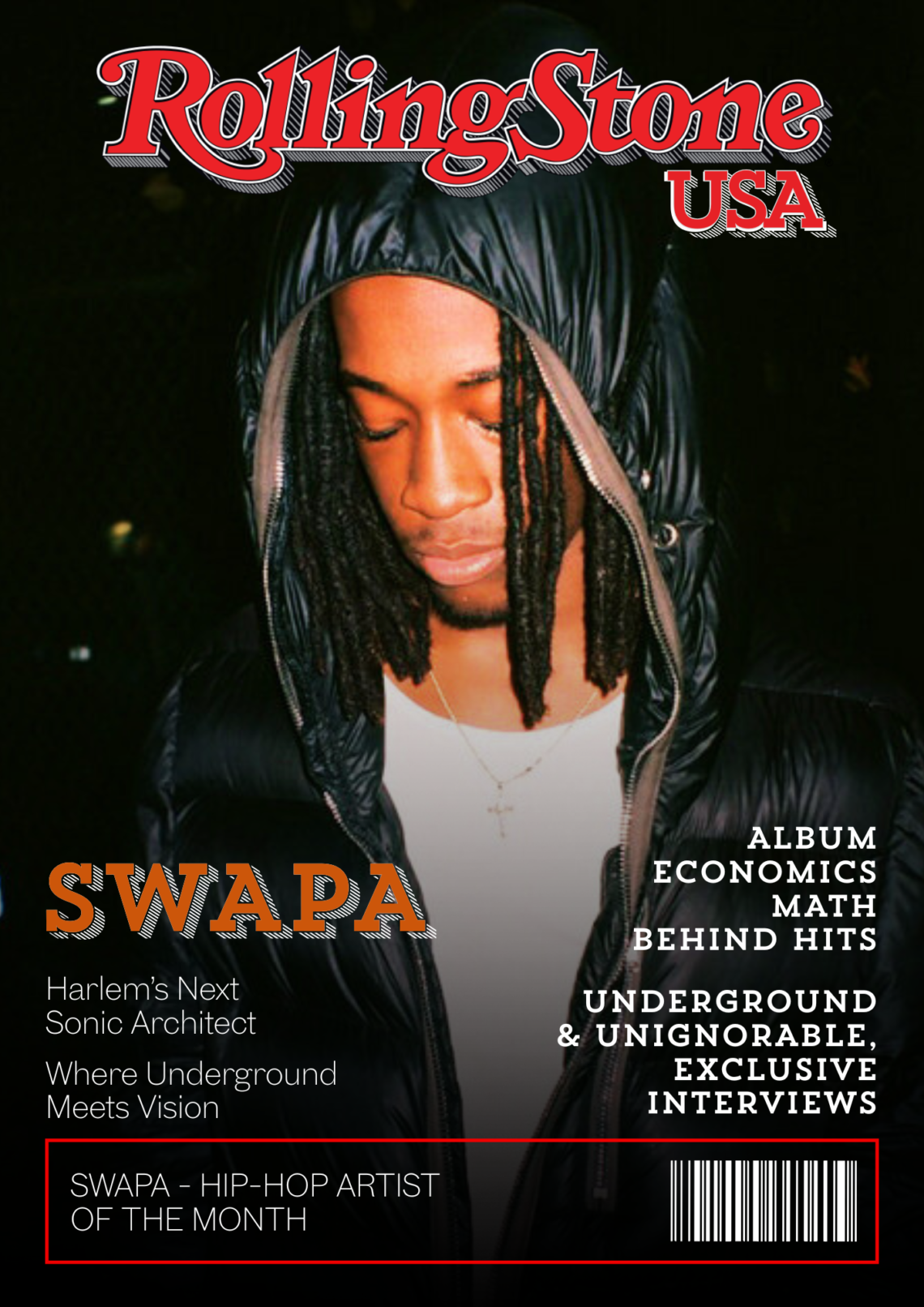
Shaun Stephenson, better known as Swapa, was born in Harlem, New York, on August 7, 2004—a place where music has always been more than background noise. It’s a language, a proving ground, a way out. From those streets, Swapa began shaping a sound that feels both atmospheric and explosive, rooted in hip-hop tradition while refusing to be boxed in by it.
Long before mainstream attention entered the conversation, Swapa was already experimenting—layering ambient textures over high-energy beats, balancing introspection with “turn-up” intensity. What emerged was not a trend-chasing formula, but a signature style that felt unmistakably his.
The Moment the Underground Took Notice
In July 2022, Swapa’s trajectory shifted with the release of “Footwork.” The track didn’t arrive with a massive marketing push or industry co-signs—it spread organically. Listeners shared it, playlists picked it up, and suddenly the underground had a new name buzzing through its circuits.
The momentum continued with New Harmony, his debut project, which positioned Swapa as more than a viral moment. The project revealed an artist willing to explore youth, ambition, and the tension of modern life—subjects that resonated with a generation navigating uncertainty while chasing something bigger.
Breakout Records and Growing Influence
If “Footwork” opened the door, “Black Truck” kicked it wide open. The track surged across Spotify and YouTube, racking up millions of streams and views. Its appeal lay in Swapa’s instinct for balance: catchy hooks that pull you in, paired with production that keeps you listening closely.
Collaborations with fellow rising artists, including Devstacks, further expanded his reach. Rather than diluting his sound, these partnerships highlighted his adaptability—proof that Swapa could move fluidly between creative worlds without losing his identity.
Consistency as a Creative Strategy

Part of Swapa’s ascent can be traced to one defining habit: consistency. New music, new visuals, steady engagement—he keeps his audience close, not through over-curation, but authenticity. On Instagram, his presence feels intentional yet unforced, a reflection of an artist who understands that connection matters as much as output.
In an era where attention spans are fleeting, Swapa’s steady rhythm of releases has helped him build something more durable than hype: loyalty.
ARMAGEDDON: A Defining Chapter
In 2024, Swapa released ARMAGEDDON, an album that marked a clear evolution. Critics praised its bold production choices and introspective lyricism, noting how effortlessly it bridged experimental soundscapes with mainstream appeal. The album didn’t abandon his roots—it refined them.
ARMAGEDDON reads like a statement of intent. Swapa isn’t content with staying underground for the sake of it; he’s interested in pushing boundaries, testing scale, and seeing how far his vision can travel without losing its core.
Authenticity Over Algorithms
What sets Swapa apart isn’t just his sound—it’s his refusal to compromise it. In a crowded hip-hop landscape driven by algorithms and short-term trends, he continues to prioritize authenticity and experimentation. That commitment has earned him respect from peers and tastemakers alike, positioning him as a leading voice in the next generation of hip-hop artists.
A Future Still Unfolding
Swapa’s story is still being written. From Harlem to the forefront of the underground scene, his journey underscores a familiar truth with a modern edge: innovation thrives when artists stay honest about who they are and fearless about where they’re going.
As his audience grows and his sound continues to evolve, one thing feels certain—Swapa isn’t just chasing the future of hip-hop. He’s actively shaping it.