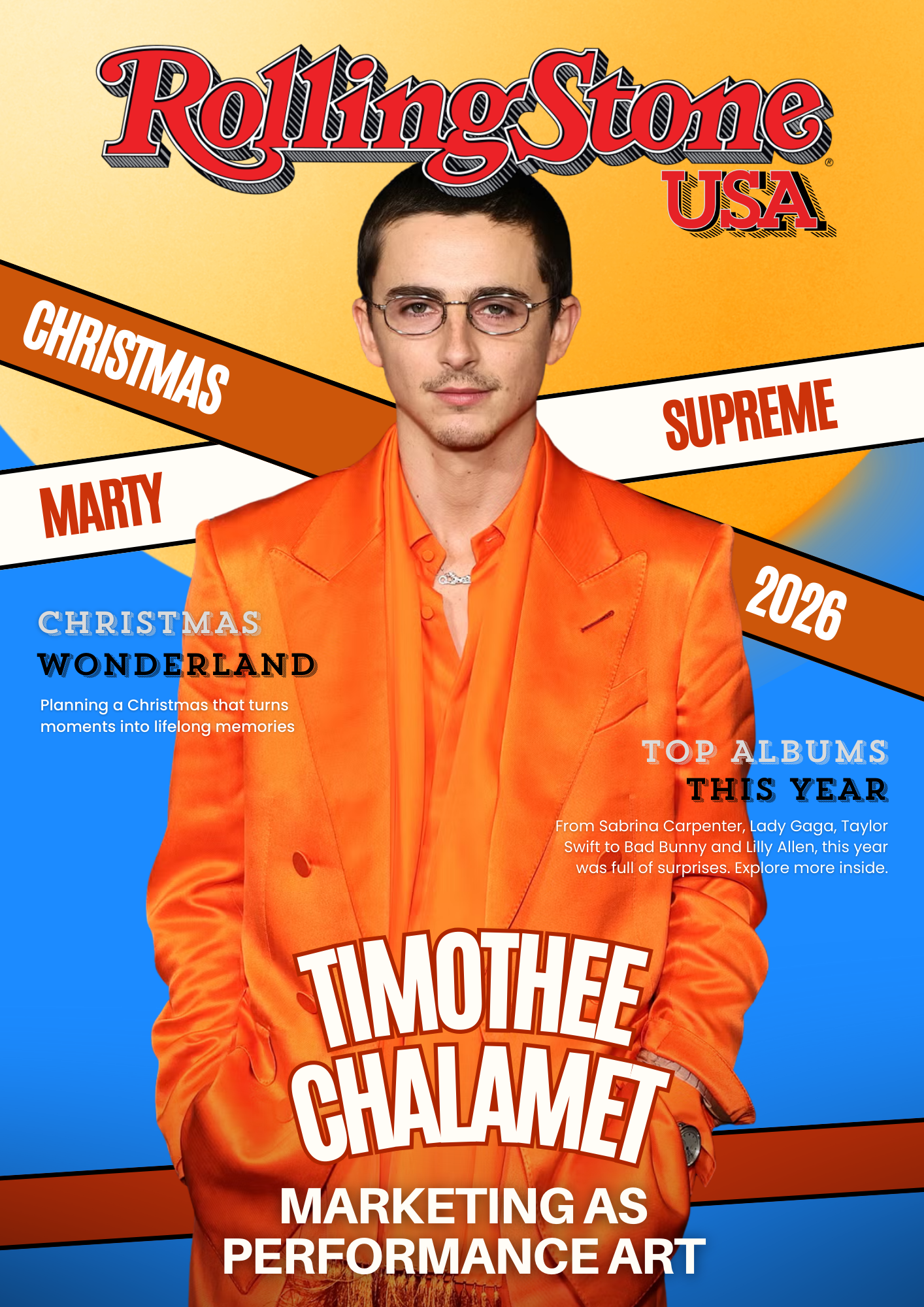
The leaked video appeared online without warning on November 8, 2025. In grainy footage that looked ripped from a corporate Zoom call, Timothée Chalamet sat in what appeared to be an internal A24 marketing meeting, pitching increasingly absurd promotional ideas for his upcoming film Marty Supreme. “What if we out-market the marketers?” he asked, barely suppressing a grin.
It was the opening salvo in what would become one of the most unconventional—and talked-about—film campaigns in recent memory.
Over the following weeks, Chalamet didn’t just promote Marty Supreme, A24’s indie feature about the world of competitive table tennis. He transformed the entire promotional cycle into something closer to guerrilla theater, blurring the boundaries between marketing, performance, and cultural event in ways that left both fans and industry insiders struggling to categorize what they were witnessing.
When Ping-Pong Becomes Pop Culture
By mid-November, temporary installations began appearing in New York and Los Angeles—”Pop-Up Ping-Pong Palaces,” as they were quickly dubbed online. These weren’t standard promotional photo-ops. They were fully realized experiences: table tennis tournaments where Chalamet himself would occasionally materialize in neon tracksuits, paddle in hand, ready to challenge fans to impromptu matches.
The images spread instantly. Crowds queued for hours. YouTube breakdowns dissecting the “SECRET Marketing Strategy” racked up millions of views, analyzing how a simple ping-pong table had become the nexus of genuine cultural conversation.
“It felt less like we were being sold a movie and more like we were being invited into this world,” one attendee posted on social media, capturing the campaign’s essential magic trick.
Breaking the Fourth Wall, Repeatedly
When Chalamet’s official press tour launched on December 10, journalists expecting standard Q&As found themselves swept into something stranger. Mid-interview, the actor would produce ping-pong paddles seemingly from nowhere. Formal conversations devolved into impromptu games. One moment he was discussing his character’s emotional arc; the next, he was serving volleys while answering questions about method acting.
El Balad covered what they called the “whimsical, interactive elements” of these encounters. It was disorienting, certainly—but also magnetic. The press, typically confined to asking variations of “What drew you to this role?”, suddenly found themselves part of the performance.
This wasn’t accidental. Throughout the campaign, there was a consistent meta-awareness, a winking acknowledgment of the promotional machinery itself. The campaign seemed to ask: What if we treated marketing not as a necessary evil, but as an extension of the film’s creative vision?
Fashion as Narrative Device
Chalamet has long understood fashion’s power as a storytelling medium, but the Marty Supreme campaign elevated this to new heights. Each public appearance featured carefully curated outfits that nodded to the film’s underdog energy—streetwear collaborations that positioned the movie within broader pop-culture conversations rather than solely in cinema circles.
By mid-December, fashion blogs were covering the campaign as intensely as film sites. Paper Magazine declared: “How Timothée Chalamet and Marty Supreme Won the Marketing War,” praising what they called a “genius fusion of style and story.”
The strategy was working. The film was infiltrating multiple cultural ecosystems simultaneously—not just movie discourse, but fashion, street culture, even sports communities intrigued by the table tennis angle.
The Theater Argument
Behind the creative stunts lay a more serious proposition: that in an era dominated by streaming, theatrical releases still matter. Each element of the campaign pressed this case—the pop-ups required physical presence, the screenings emphasized shared experience, the entire apparatus insisted that Marty Supreme was an event to be witnessed collectively, not alone on a laptop.
“This is redefining how stars sell stories,” one industry analyst noted, watching the campaign’s momentum build through December. By the 22nd, SSB Crack News was calling it “a masterclass in turning promotion into performance art.”
The question hanging over everything: Would cultural buzz translate to box-office returns? Early ticket pre-sales suggested yes, though the full answer wouldn’t arrive until wider release.
A New Blueprint?
What makes the Marty Supreme campaign significant isn’t just its creativity—it’s the way it challenges fundamental assumptions about how indie films can compete for attention. In a marketplace where streaming platforms spend hundreds of millions on algorithmic recommendations and blanket advertising, Chalamet and A24 proved that imagination, when paired with star power and strategic unpredictability, could generate equivalent or greater impact.
LinkedIn buzzed with marketing executives dissecting Chalamet’s hands-on involvement. The campaign had become a case study before the film even opened wide, evidence that traditional promotional playbooks no longer held monopolies on success.
Whether other studios will embrace such risk-taking remains unclear. This approach required a rare alignment: a star willing to fully commit to unconventional tactics, a studio (A24) with a brand built on creative audacity, and a film whose quirky premise could support experimental promotion.
But for now, as December gave way to the film’s release, one thing seemed certain: Chalamet hadn’t just marketed a movie. He’d created a cultural moment, proving that in the right hands, promotion itself could become art worth discussing—a narrative that outlasts any single press cycle, influencing how future campaigns might dare to reimagine what’s possible when you stop selling and start performing.